Indian Festivals vs. Christmas: Understanding Two Very Different Playbooks

Performance Marketing Strategies to Scale D2C Jewelry & Fashion Brands in 2025
December 5, 2025
How Jewelry & Fashion Brands Can Increase ROAS Using Creative-First Ad Campaigns
December 12, 2025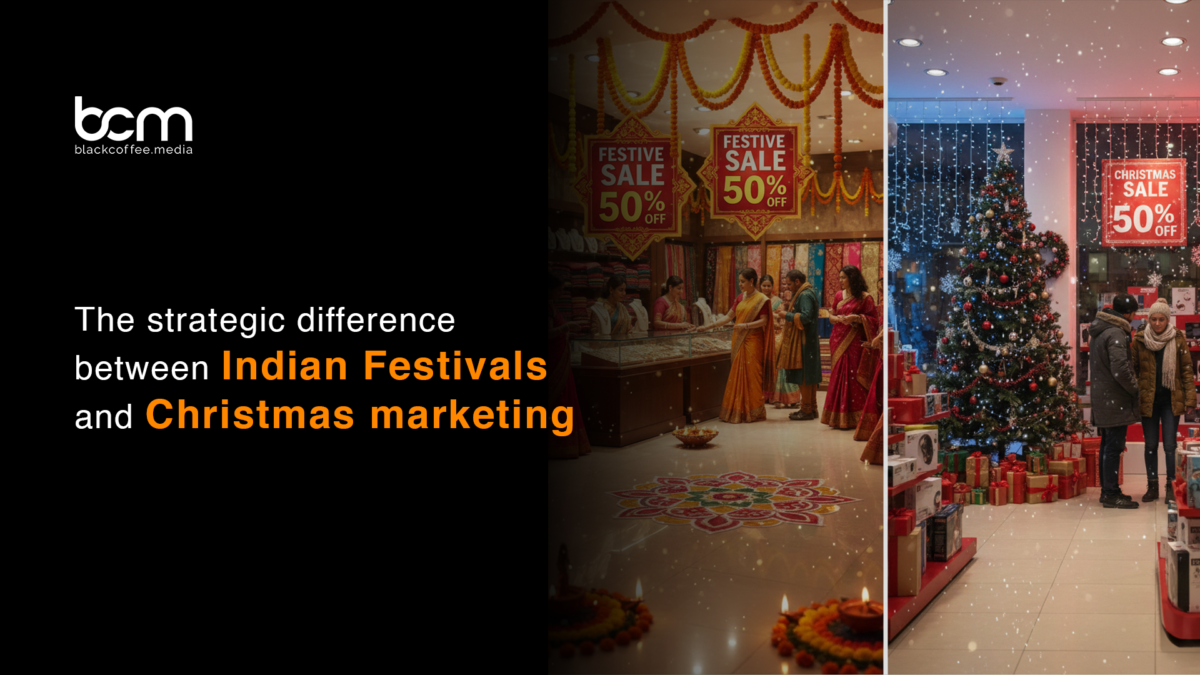
Indian brands navigate two major festive seasons every year – Diwali and Christmas-New Year. Both drive sales, both get massive ad spends. But they require fundamentally different marketing strategies.
Here’s what we’ve learned running campaigns across both.
Diwali: The Sprint
Diwali is concentrated. You have a 3-4 week window where consumer intent is at its peak. Families are shopping for everything – gifts, gold, gadgets, clothes. The purchase cycle is short and decisive. Brands need to be visible, offer compelling reasons to buy now, and capitalize on immediate intent.
The challenge here is that everyone’s competing in the same narrow window. Standing out requires sharp creative and precise targeting, not just deeper discounts.
Christmas-New Year: The Marathon
The Christmas-New Year period operates differently. It stretches from late November through early January, nearly eight weeks of sustained consumer engagement. Western markets built this into a cultural ritual of gifting season, holiday parties, year-end reflection, New Year resolutions, etc…
In India, this period has grown over the past decade. It’s less traditional, more aspirational.
Brands have more time to build narratives, run multi-phase campaigns, and create experiences rather than just push transactions.
The Strategic Difference
Diwali demands urgency. Your messaging needs to be immediate, your offers clear, your presence consistent across the short sprint. Christmas-New Year allows for storytelling. You can tease, build anticipation, and layer your communication over weeks.
Neither approach is better. They’re simply different problems requiring different solutions.
The brands that win are the ones that recognize this and adapt their strategy accordingly.